


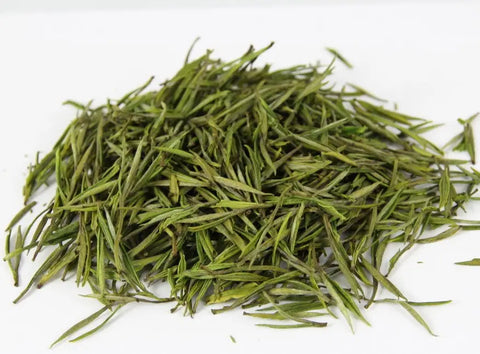
You’ve probably heard of white teas such as Silver Needles, White Peony, and Shou Mei. But there’s another tea called Anji Bai Cha, which literally translates to Anji White Tea. Surprisingly, it is not a white tea at all—it is one of China’s most celebrated green teas.
So why the confusing name?
The answer lies in history.
Nearly a thousand years ago during the Song Dynasty, Emperor Song Hui Zong wrote in The Daguan Book of Tea about a mysterious and extraordinary white tea unlike any other:
"There is a white tea that grows among rocks and forests. It has only two or three leaves, and the leaves are so thin and translucent, like jade—unparalleled and beyond the skill of human hands."
(Translation by Victoria Wu)
After the Song Dynasty, this remarkable tea seemed to disappear from history. No one knew where it grew, what it looked like, or how it tasted.
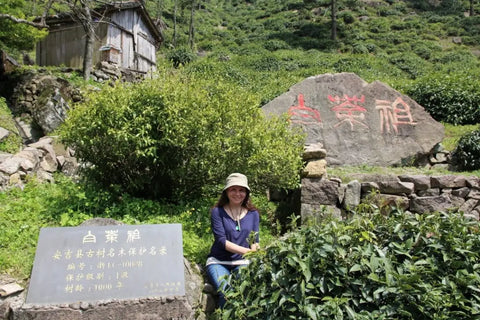
Then, in the late 20th century, researchers in Anji County, Zhejiang Province discovered a rare tea tree and confirmed it was the same extraordinary tea described by the emperor centuries earlier.
(See the photo below of Victoria visiting the thousand-year-old mother bush of Anji Bai Cha.)
What Makes Anji Bai Cha Special?
Anji Bai Cha is a unique tea cultivar whose young spring leaves naturally appear pale yellow-white rather than bright green due to lower chlorophyll content. This unusual appearance is what gave the tea its name: Bai Cha, or “white tea.”
However, appearance alone does not determine tea classification.
Because Anji Bai Cha is processed using traditional green tea methods—not white tea processing—it is correctly classified as a green tea.
Its harvest window is also exceptionally short, typically ending around mid-April, making truly fresh Anji Bai Cha a highly seasonal treasure.
Not All “Anji Bai Cha” Is the Same
In Anji County, not all green teas are true Anji Bai Cha.
Alongside this prized white-leaf cultivar, many growers also produce more common green teas from different varietals. These teas often appear in the marketplace at lower prices, creating confusion for buyers.
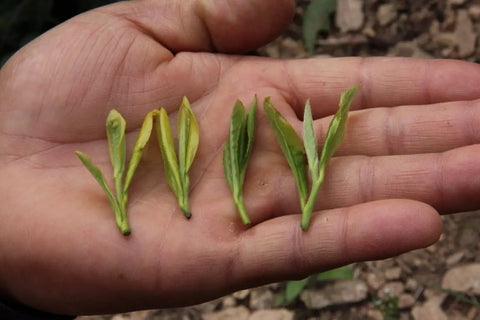
True Anji Bai Cha stands apart for its distinctive pale leaves, rarity, and extraordinary flavor.
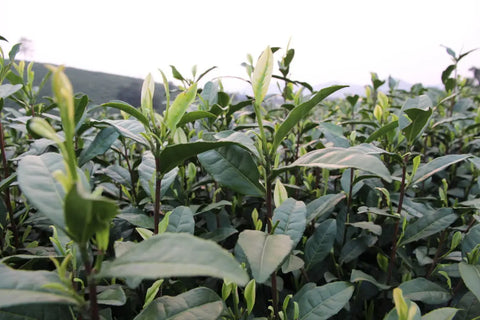
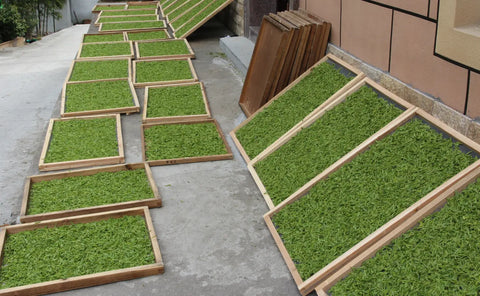
The marketplace can sometimes create confusion, as not all teas labeled from Anji are true Anji Bai Cha. In the side-by-side photo above from Victoria’s sourcing trip, you can see the difference between the prized white-leaf Anji Bai Cha cultivar we offer and the more common green tea varietal also grown in the region. While they may appear somewhat similar at first glance, the true Anji Bai Cha’s paler, jade-like leaves reflect its unique cultivar and naturally high amino acid content, which contribute to its signature freshness, delicate sweetness, and smooth umami-rich character. The more common varietals, while pleasant, simply do not offer the same level of refinement or distinctive taste experience.
A Feast for the Taste Buds
Anji Bai Cha is beloved for its bright vegetal notes, a delicate smoothness, and a gentle umami character reminiscent of a perfectly prepared vegetable broth. Because it contains exceptionally high amino acid content—nearly three times that of many regular green teas—it delivers an unusually fresh taste with very little bitterness.
This makes Anji Bai Cha particularly forgiving to brew and an excellent choice for cold brewing as well.
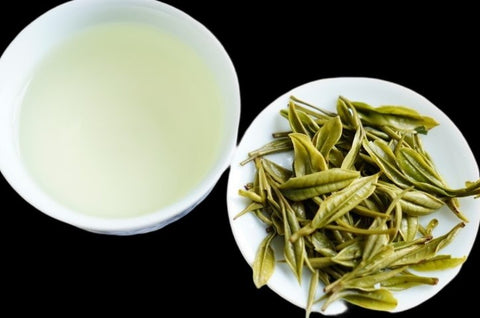
For best results, we recommend brewing with water around 185°F, never boiling water, and ideally using filtered water, no tap water please, to preserve its delicate freshness and silky texture.
For tea lovers seeking elegance, rarity, and a fascinating story in every cup, Anji Bai Cha is a truly remarkable green tea.
Leave a comment